
中文

Biologics Pulsing Production Line
Pulsating Line for Biologics Manufacturing
Based on the principles of Industry 4.0 and continuous manufacturing, our company has successfully implemented and operationalized a Pulsating Line for Biologics Manufacturing. This innovative model fundamentally breaks away from the traditional "unit-based, batch-wise" constraints of biopharmaceutical manufacturing. It deeply integrates the assembly line logic of advanced manufacturing with the stringent regulatory compliance requirements of biopharmaceuticals, ushering in a new era of efficient, high-quality, and highly traceable large-scale production for biologics such as antibodies and recombinant proteins.
From "Equipment-Driven" to "Takt-Driven"
The Pulsating Line deconstructs the complex bioprocessing chain—from seed thaw, expansion culture, harvest clarification, chromatography purification, to viral inactivation, sterile filtration, and drug substance filling—into several standardized process task units (workstations).
The core lies in the "pulse": Cells or intermediates do not flow freely between different functional areas (workstations). Instead, they move synchronously following a unified production rhythm, or Takt Time. Once all workstations complete their tasks for a batch, the entire production line "pulses" once, and all intermediates are simultaneously transferred to the next station. This "stop-move-stop" rhythm ensures production predictability and homogeneity.
Deep Integration of Isolated Task Flows and Single-Use Technology
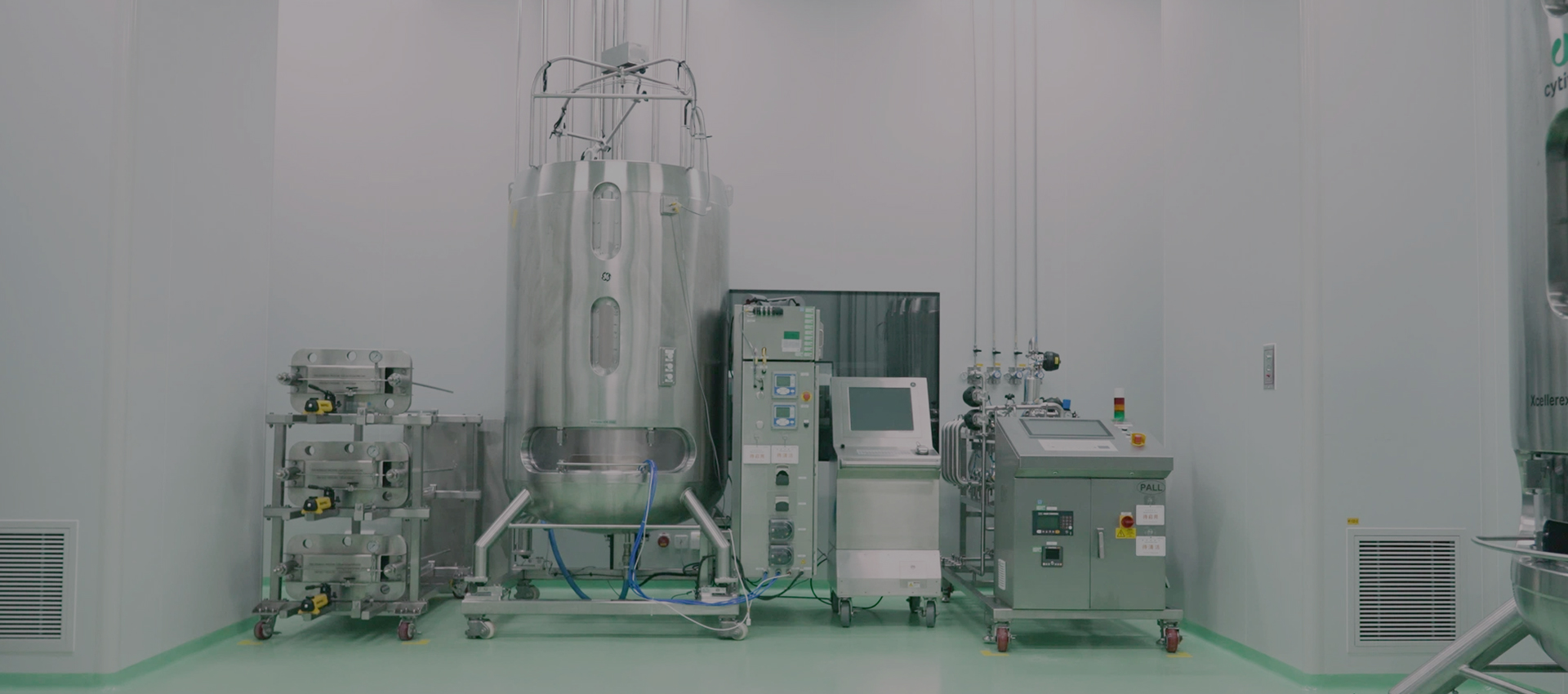
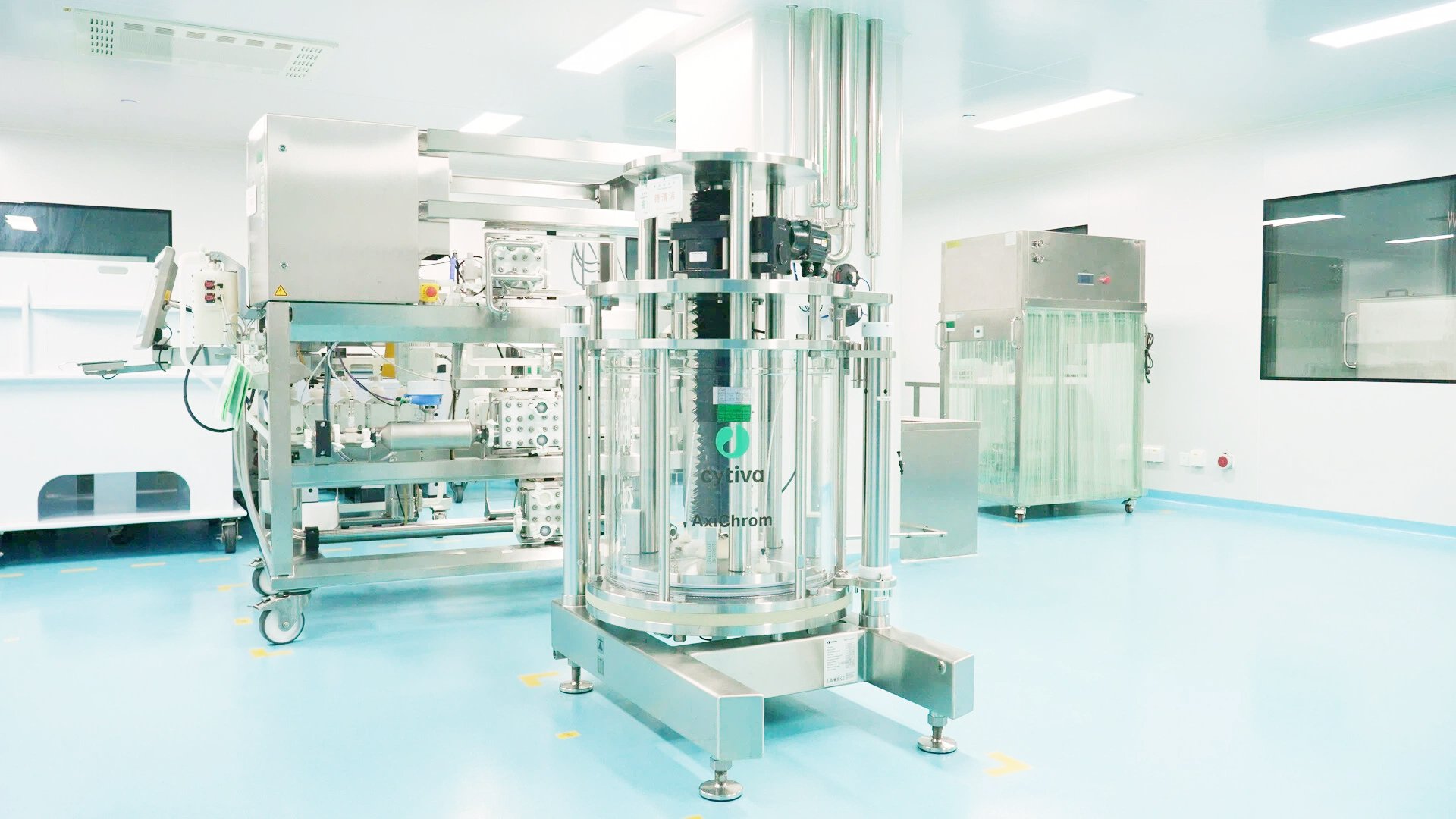
To achieve "Takt-driven" operation while meeting biosafety requirements, we have reconfigured the hardware, with single-use technology applied throughout:
Independent Task Flows and HVAC Systems

1. Independent Areas
Dedicated process control and HVAC for seed, bioreactor, and purification areas.
2. Segregation
Minimizes cross-contamination and supports multiple biosafety levels and cleanroom grades.
3. Flexibility
Enables maintenance without disruption and supports continuous manufacturing.
Fully Integrated Automation and Digitalization (EMS/BMS/WMS)
1. Environmental Control
EMS/BMS-enabled control of temperature, humidity, pressure, and particles.
2. Material Management
WMS-driven planning and delivery based on takt time and BOM.
3. Traceability
Full material tracking for efficient batch tracing and deviation management.
A Perfect Combination of Standardization and Balancing
Balanced Process Step Duration
1. Synchronized Processing
Upstream and downstream steps are aligned to match production and purification timing.
2. Optimized Throughput
Parallel bioreactors and segmented downstream operations balance harvest and processing frequency.
3. Standardized Operations
Process standardization enables efficient handling of longer steps through parallelization or staggered scheduling.
4. Flexible Scheduling
Single-use systems support rapid changeover and improved time matching across the process.
Takt-Driven Balanced Production
1. Synchronized Operations
Matching step durations enables fully coordinated process flow across all functional areas.
2. Pulsed Production Rhythm
A defined Takt Time (e.g., 4-day cycle) aligns batch completion, material transfer, and new batch initiation.
3. Simplified Scheduling
Converts complex planning into structured timetable management, improving production balance and predictability.
A Win-Win for Quality, Efficiency, and Compliance
Revolutionary Leap in Production Efficiency
It eliminates long waiting times caused by upstream/downstream capacity mismatches inherent in traditional batch production (e.g., downstream waiting for upstream harvest, upstream waiting for downstream purification). Facility and equipment utilization rates are greatly improved, significantly increasing output per unit area. The rapid turnover enabled by single-use technology, coupled with precise material support from the WMS, further amplifies this efficiency advantage.
Maximized Asset Utilization
Expensive assets like bioreactors, chromatography systems, and ultrafiltration units operate at full capacity according to the Takt Time, rather than sitting idle. This model substantially reduces the fixed asset amortization cost per unit of antibody produced.
Process Robustness and Quality Consistency
Each functional area focuses on fixed, standardized procedures. Operator skills become more specialized, and operating procedures become more consistent. The use of single-use technology eliminates Cleaning-In-Place/Sterilization-In-Place (CIP/SIP) steps, which are traditionally a major source of variability in conventional processes, thereby significantly enhancing process robustness.